Showing posts with label AWARDS. Show all posts

Tuesday, March 1, 2011

Cinema GK


CINEMA IN INDIA

http://www.onlinegk.net/blogs/wp-content/uploads/2010/09/filmawards-thumb.jpghttp://pbhooshan.tripod.com/images/harish2.jpghttp://pbhooshan.tripod.com/images/dada1.gif


The First in Indian Cinema
  • The first film to be screened in India was the Auguste and Louis Lumiere moving pictures in Bombay in 1895
  • The first short film made in India was The Flower of Persia, directed by Hiralal Sen in 1898
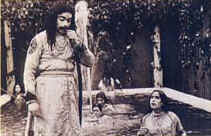
  • The first full length film in India was Raja Harishchandra, made by Dadasaheb Phalke in 1913
  • The first Indian talking film was Alam Ara, made by Ardeshir Irani in 1931
  • The Bengal Film Journalists’ Association, established in 1937, is the oldest association of film critics in India.
  • The first colour film in India was Kisan Kanya, made by Ardeshir Irani in 1937

Recent National Filmfare Awards,2010 

Bollywood marked its stamp on the 57th National Film Awards as Amitabh Bachchan won the best actor award for his performance in “Paa” and Aamir Khan- starrer “3 Idiots” was adjudged the best popular movie.
However, it was Malayalam drama “Kutty Srank” which walked away with five awards, including the best feature film.
“Kutty Srank”, with Mammoothy in the lead, also won awards for best cinematography, best screenplay, best costume and a special jury recognition, which it shared with Bollywood hit “Kaminey” and Malayalam film “Kerala Varma Pazhassi Raja”.
Raykesh Omprakash Mehra’s “Delhi 6″, shot in the bylanes of Old Delhi, bagged the Nargis Dutt award for best feature film on national integration while Shyam Benegal’s “Well Done Abba” was chosen as the best film on social issues.

R Balki’s “Paa”, was also named the best Hindi film, besides winning recognitions in the best supporting actress category (Arundhuti Nag) and best make-up (Christein Tinsley and Dominie Till).
Amit Trivedi got the best music director award for Anurag Kashyap’s “Dev-D”, a modern take on Sarat Chandra Chattopadhyay’s classic “Devdas”.
The emotional number ‘Behti hawa sa tha woh’ from “3 Idiots” bagged the best lyrics award for Swanand Kirkere.
Ananya Chatterjee was named the best actress for her role in the Bengali film “Abohoman“, which also fetched the best direction award for Rituparno Ghosh and best editing for Arghyakamal Mitra, besides being adjudged the best Bengali movie.


THE FATHER OF INDIAN CINEMA

Phalke's entry into films was entirely accidental, a momentary love affair which became the passion of a lifetime. Inspired by The Life Of Christ (1910), which he saw at the America India Picture Palace at Sandhurst Road in Bombay on December 25, 1910, Dadasaheb Phalke was fired with the ambition of making a story-film based on the life and doings of Lord Krishna. This was not the first time that he was seeing this new art form for he had made several forays into the tent cinemas before this. This time, however, the impact was different because fate had manoeuvred him into a curious position. He had just quarrelled with Seth Purushottam Vishram Mavji, his partner at the Laxmi Art Printing Works, and had quit the press, vowing never to return to the printing profession. His future, therefore, loomed ahead like a big question mark.

In a sense, Phalke was ideally suited for the newly-emerging medium of cinema. A graduate of the J.J. School of Arts in Bombay and the Kala Bhavan in Baroda, Phalke was a man of many talents: drawing, painting, photography, printing, engraving, lithography, moulding, architecture, music, magic and even stage acting. Born on April 30, 1870 at Trimbak, on the outskirts of Nasik, Dhundiraj Govind Phalke was the son of Sanskrit scholar and college professor Dajishastri Phalke. He was educated at Trimbak, Bombay (where his father was working as Professor of Sanskrit at the Wilson College) and later Baroda where he got a good grounding in the Arts.


Cinema awards


National Film Awards
Directorate of Film Festivals,(Ministry of I&B, Govt. of India)
1954
The National Film Awards are classified into the Golden Lotus Award and the Silver Lotus Awards.
Bengal Film Journalists’ Association Awards
Govt. of West Bengal
1937
The Bengal Film Journalists' Association is the oldest Association of Film critics in India, founded in 1937, by the inspiration and determination of the handful of pioneers amongst the then thin section of scribes that were drawn to film journalism with a lofty mission to serve the developing film journalism and film industry.
Filmfare Awardshttp://t3.gstatic.com/images?q=tbn:ANd9GcS5C7JiHCpxZwclparkWuoX7HFv9h3xTQUsyBxZTw6Ac_2WRcqS-g
Filmfare
1954
Filmfare Awards are the oldest and most prominent film awards given for Hindi films in India. They are given annually to honour Bollywood`s best talents and provide encouragement and incentive to the Hindi motion picture industry. The Filmfare Awards were first conceived in 1953. In the first Filmfare Awards function, held on 21st March 1954, only five awards were presented. Do Bigha Zameen was the first movie to win the Filmfare Award for the best film. The first four winners for other categories were: Bimal Roy for direction of Do Bigha Zameen, Dilip Kumar for his performance in Daag, Meena Kumari for her performance in Baiju Bawra, and Naushad for his music in Baiju Bawara. Filmfare Awards are given in the following categories.
International Indian Film Academy Awards

http://t2.gstatic.com/images?q=tbn:ANd9GcQAcIXIiBvSUP-Z7yFcbKn51SIm26VaDv6eezQtXSRsESzEaTpq
Wizcraft International Entertainment Pvt. Ltd.
2000
Started in 2000, IIFA or International Indian Film Academy Awards promotes Indian cinema at an international level. The promotion of Indian cinema globally has benefited its fans across the world. Such an endeavor has also enabled India to showcase its talent to the rest of the world.

The first IIFA awards were held at Millennium Dome, London in 2000. Since then it has been held at different venues, such as, Sun City (2001), Malaysia (2002), Johannesburg (2003), Singapore (2004), Amsterdam, Netherlands (2005), Dubai (2006) and Yorkshire (2007). In 2008 IIFA was organized at Bangkok, Thailand (2008).
Nandi Awards

http://t0.gstatic.com/images?q=tbn:ANd9GcQGopbtlGwUpDphYuOWId1W5bK7_zjl87paA7j2tp6V1vYLXwaK
Govt. of Andhra Pradesh
2002
The Nandi Awards is the Prominent award ceremony, presented annually in Andhra Pradesh, India for Telugu cinema and Television by the state government of Andhra Pradesh. "Nandi" means "bull", the awards being named after the big granite bull at Lepakshi — a cultural and historical symbol of Andhra Pradesh. Nandi Awards are presented in four categories: Gold, Silver, Bronze, and Copper. A variant, Nandi Natakotsavam Awards for Theater is also given every year by the Andhra Pradesh government for social, mythological and poetic Dramas.


Awards instituted under the National Film Awards
Award
Category

Dadsaheb Phalke Award
Lifetime contribution to cinema
The first recipient of the Dadasaheb Phalke Award was actress Devika Rani Roerich.

Indira Gandhi Award
Best first film of a director
Golden Lotus Award, given to a feature film director's first film
2010 ---Lahore  -- Sanjay Puran Singh Chauhan

Nargis Dutt Award
Best film on national integration
Silver Lotus, given to an Indian feature film director, for the best film relating to National Integration in India.
2010---Delhi-6

Best Book on Cinema
I n the year 1982 for the first time the Tamil book on cinema named as Thamizh Cinemavin Kathai written by Aranthai Narayanan Tamil won the award.
2009 ---Bollywood Melodies--- Ganesh Anantraman

Best film critic
The National Film Award of India (Silver Lotus Award) for Best Film Critic is given for Best Criticism of Indian Cinema.
2010 C.S.Venkiteswaran


Cinema institutes in India
Institute
Location
Established
Asian Academy of Film and TV
Asian Academy of Film and TV or AAFT is a film school that took a holistic and realistic approach in teaching all the intricacies of filmmaking. The film school training is not limited to only classrooms and lectures on theories and techniques. At AAFT the faculty have adopted an all-inclusive training method with equal significance on the practical training of film making and acting. The Asian Academy of Film believes that training and skill building are quite essential in the field of illustration media, Asian Academy of Film and TV has been imparting education and training in the art and craft of film making in television presentation since 1993.
Noida
1993
Film and Television Institute of India
Film and Television Institute of India (FTII), is an autonomous Institute under the Ministry of Information and Broadcasting, Govt. of India. It is fully aided by Central Government of India. It is situated in the premises of the erstwhile Prabhat Film Company in Pune, India. Since its inception in 1960, FTII has become India's premier film and television institute, with its alumni becoming biggest known actors and directors in the Indian film industry.
Pune
1960
Whistling Woods International
Promoted by Filmmaker  Subhash Ghai, Mukta Arts Limited and Filmcity Mumbai, Whistling Woods International is Asia’s largest film, television
Bombay
2006
Mindscreen Film Institute
Chennai
2006
Satyajit Ray Film and Television Institute
SRFTI is the premier institute of India for film training which stands inline with Film and Television Institute of India (FTII) for its quality of education and reputation in the Indian film industry.
Calcutta
1995
NFDC
National Film Development Corporation of India is the central agency established to encourage the good cinema movement in the country. The primary goal of the NFDC is to plan, promote and organize an integrated and efficient development of the Indian film industry and foster excellence in cinema. Over the years NFDC has provided a wide range of services essential to the growth of Indian cinema. The NFDC (and its predecessor the Film Finance Corporation) has so far funded / produced over 300 films. These films, in various Indian languages, have been widely acclaimed and have won many national and international awards.

Monday, November 30, 2009

DOSE (LITERATURE)

  1. The Village By The Sea (1982) is a novel written by the popular Indian American writer Anita Desai. It is based on the poverty, hardships and sorrow faced by a small rural community in India.The novel was the basis for the 1991 television series of the same name starring Saeed Jaffrey.It was screened on BBC 1 on Sunday afternoons.
  2. Anita Mazumdar Desai  is an Indian novelist and Emeritus John E. Burchard Professor of Humanities at the Massachusetts Institute of Technology. She has been shortlisted for the Booker prize three times. Her daughter, the author Kiran Desai, won the 2006 Booker prize.
  3. Kiran Desai  is an Indian author who is a citizen of India and a permanent resident of the United States. Her novel The Inheritance of Loss won the 2006 Man Booker Prize and the National Book Critics Circle Fiction Award. She is the daughter of the noted author Anita Desai.
  4. Sir Ahmed Salman Rushdie (born 19 June 1947) is a British Indian novelist and essayist. He achieved notability with his second novel, Midnight's Children (1981), which won the Booker Prize in 1981. His fourth novel, The Satanic Verses (1988), was the center of The Satanic Verses controversy, with protests from Muslims in several countries. Some of the protests were violent, with Rushdie facing death threats and a fatwā issued by Ayatollah Ruhollah Khomeini, the Supreme Leader of Iran, in February 1989.
  5. After Midnight's Children, Rushdie wrote Shame (1983), in which he depicts the political turmoil in Pakistan, basing his characters on Zulfikar Ali Bhutto and General Muhammad Zia-ul-Haq. Shame won France's Prix du Meilleur Livre Étranger (Best Foreign Book) and was a close runner-up for the Booker Prize.

Wednesday, November 25, 2009

Man of Peace

The title Man of Peace was created in 1999 by the annual World Summit of Nobel Peace Prize Laureates in Rome. The purpose of the award is to recognize individuals who have offered "an outstanding contribution to international social justice and peace".

An initiative by former Soviet leader Mikhail Gorbachev, himself a winner of a Nobel Peace Prize, the award is presented in Rome's Campidoglio (Capitoline Hill) by President Gorbachev, Walter Veltroni, Mayor of Rome, and the Nobel Peace Prize Laureates attending the annual summit meeting.

Recipients of the award include:

In its early years the award was referred to as both the "Man for Peace" in Europe and "Man of Peace" in the United States. In 2006 its title was officially changed to "Man of Peace"

Tuesday, November 24, 2009

Prominent Film Awards in India

Awards

AwardSinceAwarded by
National Film Awards1954Directorate of Film Festivals, Government of India
Bengal Film Journalists' Association Awards1937Bengal Film Journalists' Association Awards, Government of West Bengal
Filmfare Awards1954Filmfare
Star Screen Awards1995STAR TV (Asia)
Zee Cine Awards1998Zee Entertainment Enterprises

Stard Dust Award

Other awards include the International Indian Film Academy Awards, International Tamil Film Awards, Bollywood Movie Awards, the Nandi Awards and the Global Indian Film Awards.

International Lenin Peace Prize

The International Lenin Peace Prize (Russian: международная Ленинская премия мира) was the Soviet Union's equivalent to the Nobel Peace Prize, named in honor ofVladimir Lenin. It was awarded by a panel appointed by the Soviet government, to notable individuals whom the panel indicated had "strengthened peace among peoples". It was founded as the International Stalin Prize for Strengthening Peace Among Peoples, but was renamed the International Lenin Prize for Strengthening Peace Among Peoples (Russian: Международная Ленинская премия «За укрепление мира между народами») as a result of destalinization. Unlike the Nobel Prize, the Lenin Peace Prize was usually awarded to several people a year rather than to just one individual. The prize was mainly awarded to prominent Communists and supporters of the Soviet Union who were not Soviet citizens.

The prize was created as the International Stalin Prize for Strengthening Peace Among Peoples on December 21, 1949 by the ukaz of the Presidium of the Supreme Soviet in honor of Joseph Stalin's seventieth birthday (although it was actually after his seventy-first). Following Nikita Khrushchev's denunciation of Stalin during the Twentieth Party Congress of 1956, the prize was renamed on September 6 the International Lenin Prize for Strengthening Peace Among Peoples. All previous recipients were asked to return their Stalin Prizes so they could be replaced by the renamed Lenin Prize. By a decision of Presidium of the Supreme Soviet of the USSR of December 11, 1989, the prize was renamed the International Lenin Peace Prize.[1] Two years later, after the USSR had collapsed, the Russian government ended the award program.

The International Lenin Prize should not be confused with the International Peace Prize, awarded by the World Peace Council. There was also a Stalin Prize (later renamed theUSSR State Prize) created during 1941 which was awarded annually to accomplished Soviet writers, composers, artists and scientists.

Sunday, November 22, 2009

Nirmal Gram Puraskar 2009

Districts and Panchayat blocks from Kerala, Karnataka, Mahrashtra and West Bengal have been selected for the Nirmal Gram Puraskar 2009 for achieving total sanitation in their respective areas. President Pratibha Patil will felicitate the winners from these Panchayati Raj Institutions at a function here on November 17.

The districts have been selected for their commendable performance in the sanitation programme, according to an official release. The award is given away by the Government to encourage a complete stop to open defecation as envisaged in the total sanitation programme by 2012.

The Panchayati Raj Institutions that have attained full sanitation coverage and completely eliminated the practise of open defection are awarded the prestigious Nirmal Gram Puraskar every year, the release said. The incentive amount is related to the population of the Panchayat concerned.


Saturday, November 21, 2009

Nobel Prizes(source--Nobelprize.org)

Nobel Prizes, Photo: Hans <span class=

The Nobel Prize

Every year since 1901 the Nobel Prize has been awarded for achievements in physics, chemistry, physiology or medicine, literature and for peace. The Nobel Prize is an international award administered by the Nobel Foundation in Stockholm, Sweden. In 1968, Sveriges Riksbank established The Sveriges Riksbank Prize in Economic Sciences in Memory of Alfred Nobel, founder of the Nobel Prize. Each prize consists of a medal, personal diploma, and a cash award.


Excerpt of the will where the <span class=

The Nobel Prize Awarders

Who selects the Nobel Laureates? In his last will and testament, Alfred Nobel specifically designated the institutions responsible for the prizes he wished to be established:

The Royal Swedish Academy of Sciences for the Nobel Prize in Physics and Chemistry,

Karolinska Institute for the Nobel Prize in Physiology or Medicine,

the Swedish Academy for the Nobel Prize in Literature, and

a Committee of five persons to be elected by the Norwegian Parliament (Storting) for the Nobel Peace Prize


In 1968, the Sveriges Riksbank established the Sveriges Riksbank Prize in Economics in Memory of Alfred Nobel.

The Royal Swedish Academy of Sciences was given the task to select the Economics Prize Laureates starting in 1969.

Nomination

Nomination for the Nobel Prizes

Each year the respective Nobel Committees send individual invitations to thousands of members of academies, university professors, scientists from numerous countries, previous Nobel Laureates, members of parliamentary assemblies and others, asking them to submit candidates for the Nobel Prizes for the coming year. These nominators are chosen in such a way that as many countries and universities as possible are represented over time.


Announcement of the Literature Prize, Copyright © <span class=

Nobel Prize Announcements

The announcement of the Nobel Laureates and the Laureates in Economic Sciences for the year is made on the same day that the Nobel Prize awarding institutions choose from among the names recommended by the respective Nobel Committees. Immediately after the vote, a press conference is held by the concerned Nobel Prize awarder.


2009 Nobel Prizes


Related Posts with Thumbnails